Question Mark in Morse Code: How to Send and Read ..–..
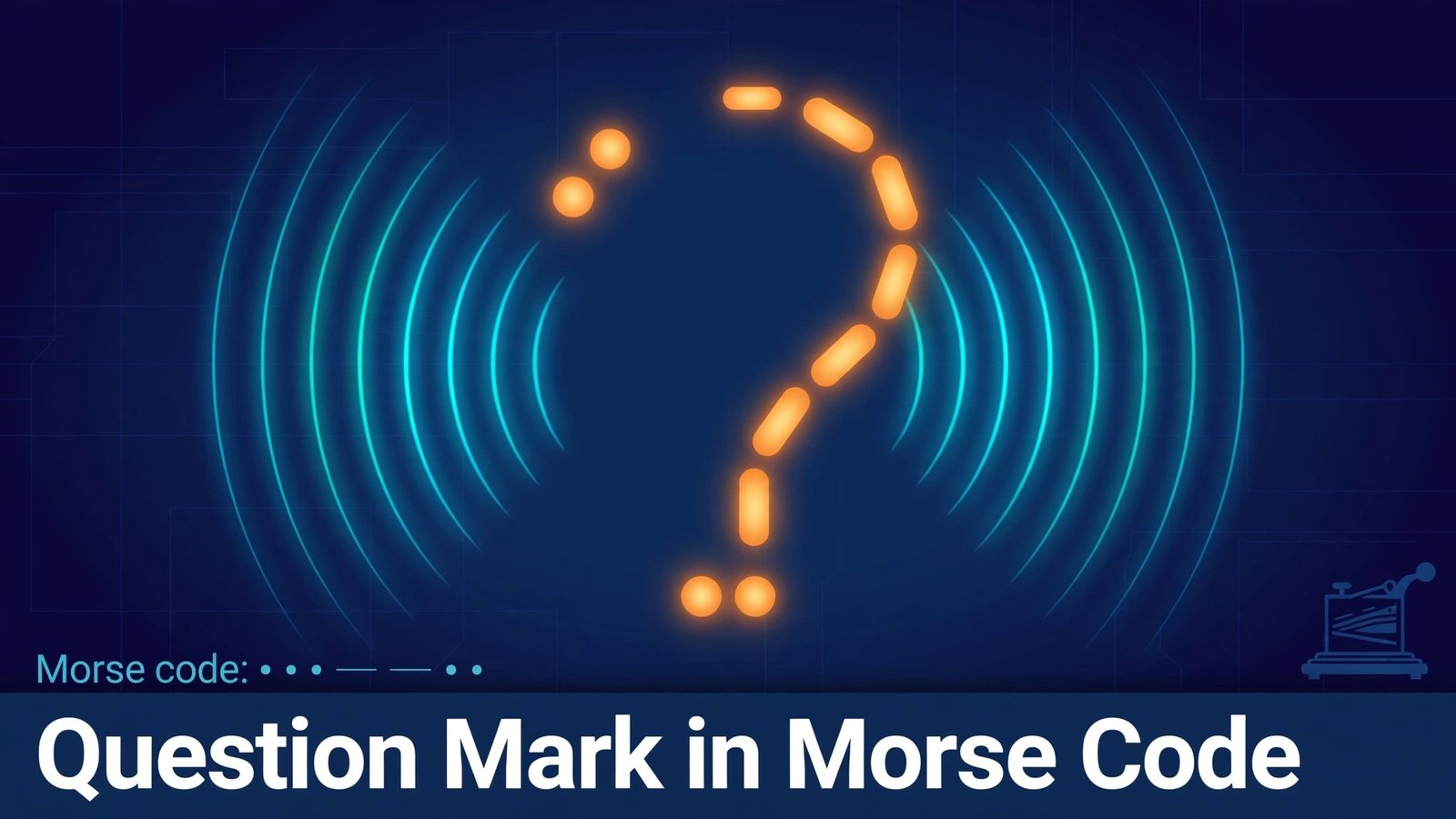
If you have been working through the alphabet and numbers on our Morse code translator, the next skill to learn is punctuation. The question mark in Morse code is ..–.. — two dots, two dashes, and two dots, sent as one continuous character. In this guide we will break down the pattern, show you exactly how to key it, how to recognise it by ear, and where it appears in real-world radio practice.
What Is the Question Mark in Morse Code?
International Morse code defines a code pattern for every common punctuation mark, not just letters and numbers. The question mark is assigned ..–.. (dit dit dah dah dit dit). It was one of the standard punctuation symbols agreed when the international code was formalised, and it is still in active use today by amateur radio operators, maritime services, and learners practising with a key.
Because punctuation marks take longer to send than letters, each one has a deliberate “shape” that makes it easy to distinguish by ear. The question mark’s shape is memorable: it begins and ends with short, quick dits, with two long dahs in the middle — a rhythm that sounds a little like a rising and falling inflection, which is rather fitting for a question.
| Character | Morse pattern | Pattern length |
|---|---|---|
| Question mark (?) | ..–.. | 6 elements |
| Period (.) | .-.-.- | 6 elements |
| Comma (,) | –..– | 6 elements |
| Exclamation mark (!) | -.-.– | 6 elements |
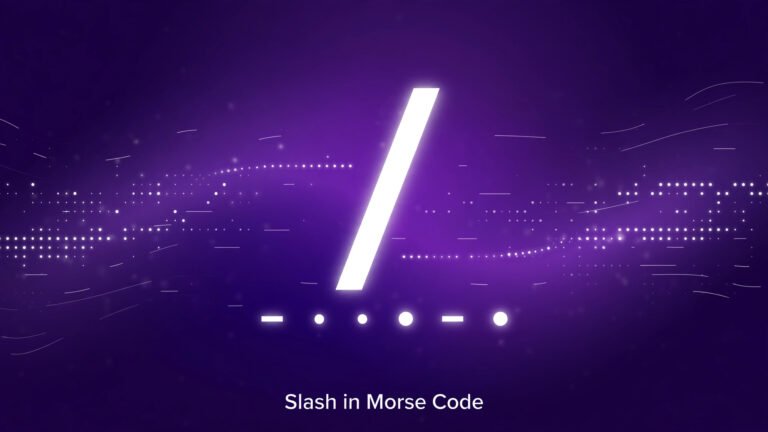
| Slash (/) | -..-. | 5 elements |
Notice how the period, comma and question mark are all six elements long — that consistent length is a hallmark of punctuation in the International Morse Code standard, defined by the ITU’s Morse code framework.
How to Send a Question Mark: Timing Guide
A question mark is only readable if the timing is right. Morse code runs on a single unit of time — the length of one dit — and every other duration is built from it:
- Dit (dot): 1 unit — a short blip.
- Dah (dash): 3 units — three times as long as a dit.
- Gap between elements of one character: 1 unit of silence.
- Gap between characters: 3 units of silence.
- Gap between words: 7 units of silence.
So to send ..–.., key: dit (pause) dit (pause) dah (pause) dah (pause) dit (pause) dit. The pauses inside the character stay short — one unit each. If you hesitate too long in the middle, the listener may hear two characters instead of one, for example “..” (the letter I) followed by “–..” (the letter Z), which is the most common beginner mistake.
At a relaxed learning speed of 10 words per minute, a question mark takes roughly three seconds to send. At 20 WPM, it takes about a second and a half. Practice with the audio on our Morse code translator tool — type a sentence ending in a question mark and listen until the pattern feels automatic.
How to Recognise ..–.. by Ear
Reading Morse by sound is a separate skill from keying it, and punctuation is where beginners usually stumble. The question mark’s rhythm — di-di-DA-DA-di-di — has a distinctive bounce. Try these drills:
- Speed drills: type “yes? no? maybe?” into the translator and replay it at increasing speeds until you can spot the question mark without looking.
- Contrast training: compare ..–.. against the period (.-.-.-) and the comma (–..–). The question mark is the only one that starts and ends with a pair of dits.
- Question-and-answer copy: have a partner send short questions — “ready?” “copy?” “again?” — and copy them down. In real amateur radio use, this is the closest to how punctuation actually shows up on the air.
As we covered in our guide to learning Morse code fast, recognising whole characters as single sound-shapes (rather than counting dots and dashes) is the fastest route to fluency. The same applies to punctuation — hear “..–..” as one shape, not as six pieces.
Where the Question Mark Shows Up in Real Use
Amateur radio and the QUERY prosign
On the ham bands, the question mark often doubles as the prosign QUERY — sent as ..–.. to request information, much like the spoken proword “query”. Related prosigns are sent with angle-bracket notation in writing, such as the invitation to transmit <KN> we explored in our post on ham radio shorthand and 73. The question mark sits alongside these signals in everyday on-air procedure.
Signal reports and contests
Contest operators frequently send a lone “?” when they missed a callsign or need a repeat — it is faster than sending “please repeat” in full. If you listen to any CW contest, you will hear ..–.. constantly. It is also used after a partial callsign (“K7?”) to ask the station to resend.
Training and examinations
Several amateur radio licence exams and CW training programmes include punctuation in their Morse sections, and the question mark is a favourite test item because it rewards candidates who learned timing properly. If you are preparing, make ..–.. one of your drill characters.
Decoding puzzles and treasure hunts
Morse puzzles love the question mark: a coded riddle that literally ends in “..–..” is a common device in puzzle hunts and famous Morse messages recreations. Knowing the symbol on sight (or by sound) is a genuine advantage.
Memory Tricks to Learn ..–..
Mnemonics help the pattern stick. Pick whichever image works for you:
- The stutter: “did-did-DUH-DUH-did-did” — say it out loud in that rhythm and the physical shape follows.
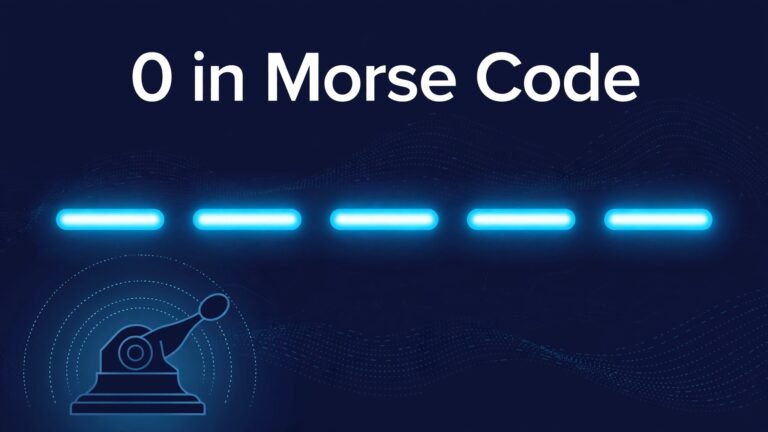
- The pair pattern: two short, two long, two short — a sandwich of dits around dahs. Numbers work the same way (the number 9 is —-.), so the “pairs” idea transfers across characters.
- The written shape: a handwritten “?” has two quick curves at the top and bottom joined by a long sweep — roughly two short strokes, two long strokes, two short strokes.
- The contrast pair: learn it alongside the period (.-.-.-): “the question mark starts and ends with double-dits; the period alternates.” One sentence, two characters, permanently separated in memory.
Common Mistakes (and How to Fix Them)
| Mistake | What happens | Fix |
|---|---|---|
| Stretching the middle gap | Listener hears “I” + “Z” (.. / –..) | Keep intra-character gaps to exactly 1 unit |
| Confusing it with the comma | –..– is dash-heavy at the start | Question mark always starts with two dits |
| Counting instead of hearing | Too slow to copy at speed | Learn ..–.. as one rhythm, like the letter A (. -) pattern |
| Forgetting punctuation exists | Questions copied as plain statements | Always listen to the last character before the word gap |
A Brief History of Morse Punctuation
The original American Morse code devised by Samuel Morse and Alfred Vail in the 1840s carried punctuation only sparingly — early telegraphy was terse, and every extra symbol cost money. The modern set, including the question mark as we know it, was standardised when the International Morse Code was adopted in 1865 and has remained essentially unchanged since the ITU took stewardship of the code. The period, comma and question mark were given their six-element forms deliberately, to stand out clearly from the shorter letter patterns around them — an early piece of user-interface design for the telegraph era, described in detail in Britannica’s Morse code overview.
FAQ
What is a question mark in Morse code?
The question mark is ..–.. in International Morse code: two dots, two dashes, two dots. It is sent as a single character with one-unit gaps between its six elements.
How do you write a question mark in Morse code?
Write it as ..–.. using dots (.) and dashes (-). When decoding visually, the pattern always begins and ends with a pair of dots, which distinguishes it from the comma (–..–) and period (.-.-.-).
Is there a special radio meaning for ? in Morse?
Yes. In amateur radio CW practice, a lone ..–.. is the QUERY prosign — a request for a repeat or for information. Contest operators send it constantly when they miss a callsign.
How long does a question mark take to send?
The six elements plus their gaps total 17 time units. At 10 words per minute that is about 3 seconds; at 20 WPM it is roughly 1.5 seconds. Accurate internal timing matters more than speed — a stretched gap turns one question mark into two wrong letters.
What is the difference between ? and the Morse comma?
The question mark is ..–.. (dit-heavy at both ends) while the comma is –..– (dah-heavy at the start). By ear, the question mark sounds bouncy; the comma sounds heavier up front.
Practice It Right Now
Open the Morse code translator, type a question — “are you there?” works nicely — and listen to ..–.. in context. Slow the playback down, then speed it up, until the question mark’s bounce is unmistakable. And when you are ready for the rest of the set, our famous messages collection is full of real Morse text to decode.
Tomorrow we will take on another punctuation mark from the series — each one gets easier once ..–.. is locked in.