What Is B in Morse Code?
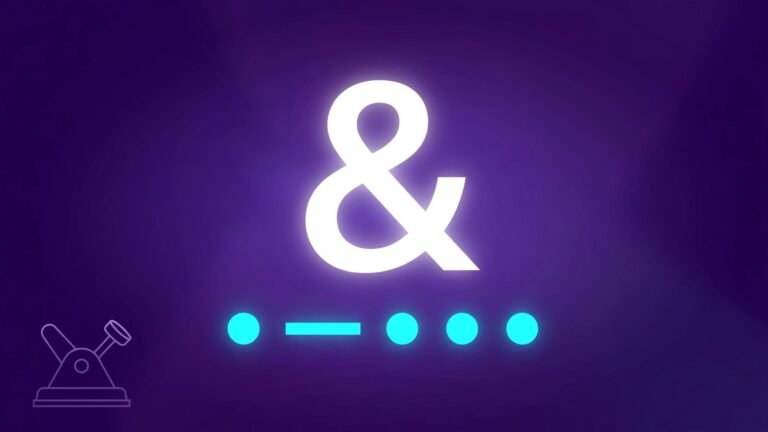
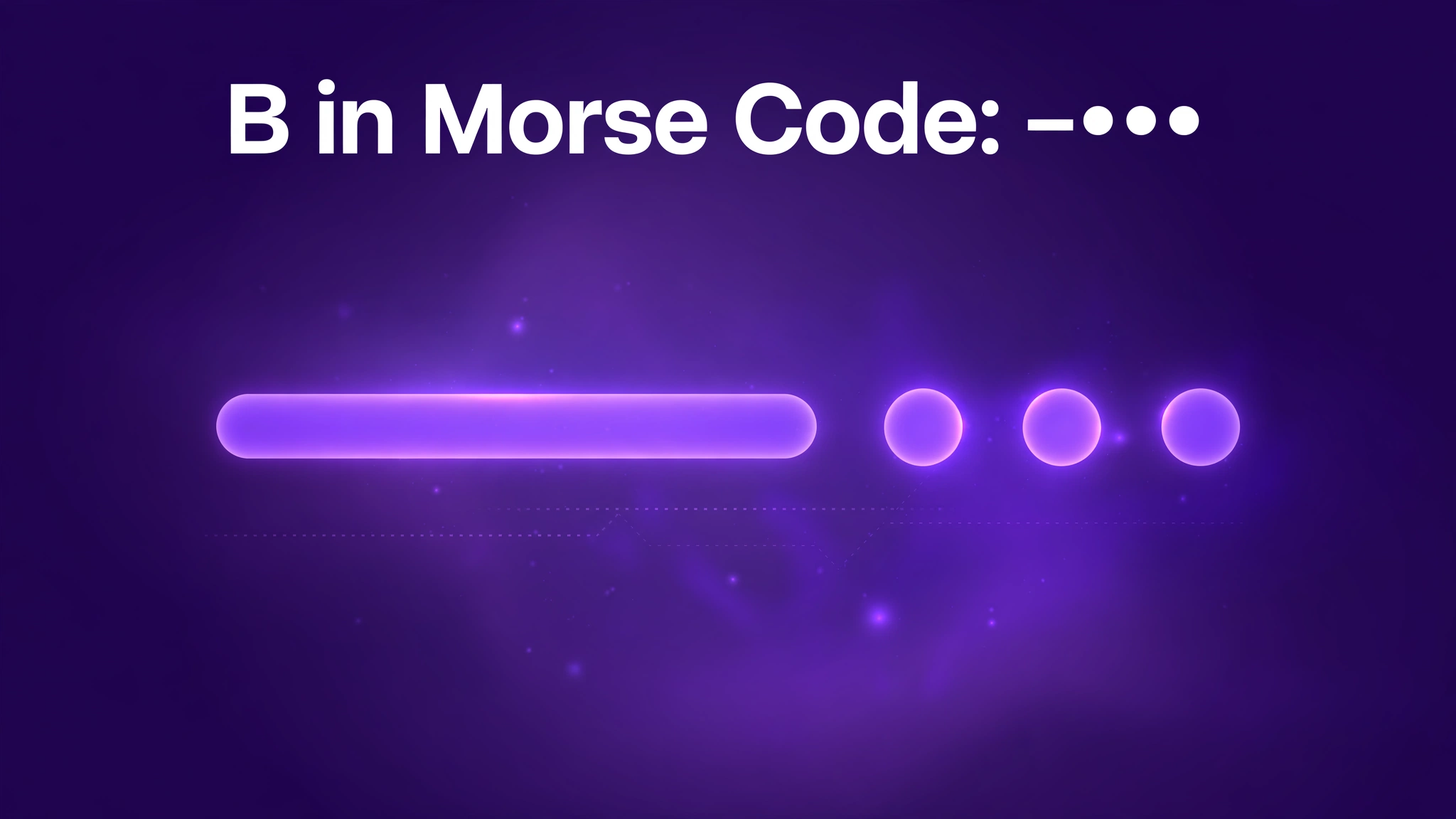
The letter B in Morse code is a dash followed by three dots: –•••. When operators read it aloud, it is spoken as “dah-dit-dit-dit” — one long mark, then three short ones. In the NATO phonetic alphabet, used by pilots, sailors and amateur radio operators worldwide, B is called Bravo.
It is one of the most satisfying letters for beginners to learn. The pattern has a clear rhythm — a single strong beat followed by three quick taps — which makes it easy to recognise by ear once you have heard it a few times. If you are still learning the alphabet, try converting the letter instantly with the Morse Zone Morse code translator and listen to how it sounds.
How to Read and Write B in Morse Code
Visually, B is written as:
– • • •
- Dash (–): a long mark, three times the length of a dot. In sound, it is a long beep (“dah”); in light, a long flash.
- Dot (•): a short mark. In sound, a quick beep (“dit”); in light, a short flash.
Timing matters in International Morse Code. Each dot lasts one time unit, each dash lasts three units, the gap between the marks inside one letter is one unit, and the gap between letters is three units. So a correctly timed B sounds like: DAAAH–dit-dit-dit, with even spacing.
How B Sounds at Different Speeds
Morse speed is measured in words per minute (WPM). At a beginner-friendly 5 WPM, you can count each mark of B individually. At 20 WPM — a typical amateur radio speed — the whole letter blurs into a single rhythmic shape, and you stop hearing “dash-dot-dot-dot” and start hearing Bravo.
This is why experienced teachers insist on learning Morse by sound, not by sight. The Koch method, developed by psychologist Ludwig Koch in the 1930s, has you learn letters at full speed from day one, so your ear absorbs B’s rhythm as one sound rather than four memorised symbols.
B vs D: The Most Common Confusion
The letter most often confused with B is D (–••), which is identical except that it has two dots instead of three. When copying by ear at speed, beginners sometimes drop or add a dot.
| Letter | Code | Spoken |
|---|---|---|
| B | –••• | dah-dit-dit-dit |
| D | –•• | dah-dit-dit |
| 6 | –•••• | dah-dit-dit-dit-dit |
The fix is practice at slightly higher speeds: when you stop counting individual dots and start recognising the overall shape, B and D become unmistakable. You can test yourself by converting “B” and “D” back and forth on the free Morse translator until the difference feels automatic.
B in the History of Morse Code
Morse code was developed in the 1830s and 1840s by Samuel Morse and his collaborator Alfred Vail. Vail made a crucial improvement: instead of assigning codes arbitrarily, he studied a printer’s type case to estimate how often each English letter was used, giving frequent letters the shortest codes. That is why E is a single dot — and why B, a moderately common letter, got a moderately short four-mark code.
The original American Morse system was replaced by the standard we use today — International Morse Code — which was first established at a conference in Paris in 1865 and later maintained by the ITU (International Telecommunication Union), currently as Recommendation ITU-R M.1677-1. The code for B has been –••• ever since, which means every telegraph operator, ship’s radio officer and amateur “ham” for more than 150 years has keyed the same dash-and-three-dots for B.
Where You’ll Meet the Letter B
Amateur (Ham) Radio
B shows up constantly in amateur radio. Callsigns — the unique identifiers every licensed operator transmits — often contain B, and the procedural word “Bravo” is spoken whenever a callsign or message is spelled out on air to avoid confusion.
Cut Numbers: B Secretly Means 7
Here is a fun fact radio operators love: in high-speed contests, hams use cut numbers — shortened codes for digits. The cut-number for 7 is –•••, the exact code for the letter B. So in a contest exchange, an operator might send “B” and mean “7”. This only applies in that shorthand context; in normal translation, –••• is always the letter B.
Craft, Jewellery and Puzzles
Because B’s pattern (one long mark, three short) looks striking, it is popular in Morse code bracelets — one long bead followed by three small beads spells B. It is also a favourite in puzzle hunts, escape rooms and “decode the initials” classroom activities, where its distinctive shape is easy to spot but not instantly obvious.
Easy Memory Tricks for B
- The “big beat” trick: think of B as one big beat followed by three small beats. The shape matches the letter’s personality — bold start, quick finish.
- The “Bravo bounce”: say BRA-vo-vo-vo, stressing the first syllable long and the next three short. Your voice naturally reproduces dah-dit-dit-dit.
- The bar-and-dots image: picture a long bar with three dots rolling off it — like a comet with a three-dot tail.
- Learn it as a sound, not a picture: listen to B at 15–20 WPM on the Morse code translator with audio ten times in a row. Your brain will file it as a single rhythm, which is far more durable than memorising “dash dot dot dot”.
Quick Practice: Encode These With B
Grab a pencil or open the translator and try encoding these words. Answers are below — no peeking!
- BOB
- BEE
- BAT
Answers: 1) –••• ––– –••• 2) –••• • • 3) –••• •– –
If you encoded all three without looking at the chart, B is already in your muscle memory. Keep practising with the other letters in our series — each letter post on Morse Zone works the same way, so you can learn the whole alphabet one letter at a time.
FAQs About B in Morse Code
What is B in Morse code?
B in Morse code is a dash followed by three dots: –•••. It is spoken as “dah-dit-dit-dit” and its NATO phonetic word is “Bravo”.
How can I remember B in Morse code easily?
Think of it as one big beat plus three small beats, or chant “BRA-vo-vo-vo” with a long first syllable and three short ones. Listening to it at full speed (15–20 WPM) several times also locks in the rhythm as a single sound.
What is the difference between B and D in Morse code?
B is –••• (dash plus three dots) while D is –•• (dash plus two dots). They sound almost identical except for the extra dot in B. Practising at higher speeds, where you recognise whole rhythms instead of counting dots, removes the confusion.
What is B called in the NATO phonetic alphabet?
B is called “Bravo” in the NATO phonetic alphabet. Pilots, military personnel and amateur radio operators say “Bravo” whenever they need to spell out the letter B unambiguously.
Is there a fun fact about B in Morse code?
Yes — in amateur radio contest shorthand called “cut numbers”, the code –••• doubles as the number 7. And in the 1840s, Alfred Vail assigned B its four-mark length based on how often the letter appears in English, which is why common letters have shorter codes.