Every kid dreams of having a secret language — a way to pass notes, send hidden signals, and outsmart the grown-ups. Long before smartphones and text messages, there was a real-life secret code that did exactly that: Morse code. And the best part? Your child can learn it today, no batteries required.
Morse code turns the alphabet into patterns of short and long signals — dots and dashes — that can be tapped, flashed, beeped, or even drawn. For kids, it feels like magic. For parents and teachers, it is something even better: a playful doorway into history, language, math, and science, all wrapped up in a game.
Why Morse Code Is Great for Kids
If you are wondering whether a 200-year-old communication system is worth your child’s time, consider what learning Morse code quietly teaches:
It is STEM in disguise. Morse code is essentially binary communication — the same on/off logic that powers computers. When kids learn that a dot is a short signal and a dash is a long one, they are grasping the foundation of digital encoding. Teachers love using it as a bridge into lessons about signals, patterns, and how information travels.
It is living history. In 1844, Samuel Morse sent the first telegraph message — “What hath God wrought” — from Washington, D.C. to Baltimore. For decades, Morse code was how the world communicated across oceans. Ships, railroads, and newsrooms depended on it. The Titanic’s radio operators sent distress calls in Morse code in 1912, and nearby ships that understood those signals raced to help. When kids learn Morse code, they are touching the same skill that once connected continents.
It builds problem-solving skills. Decoding a message requires focus, pattern recognition, and patience — the same muscles kids use in math and reading. There is no autocomplete and no hints; just careful listening and thinking.
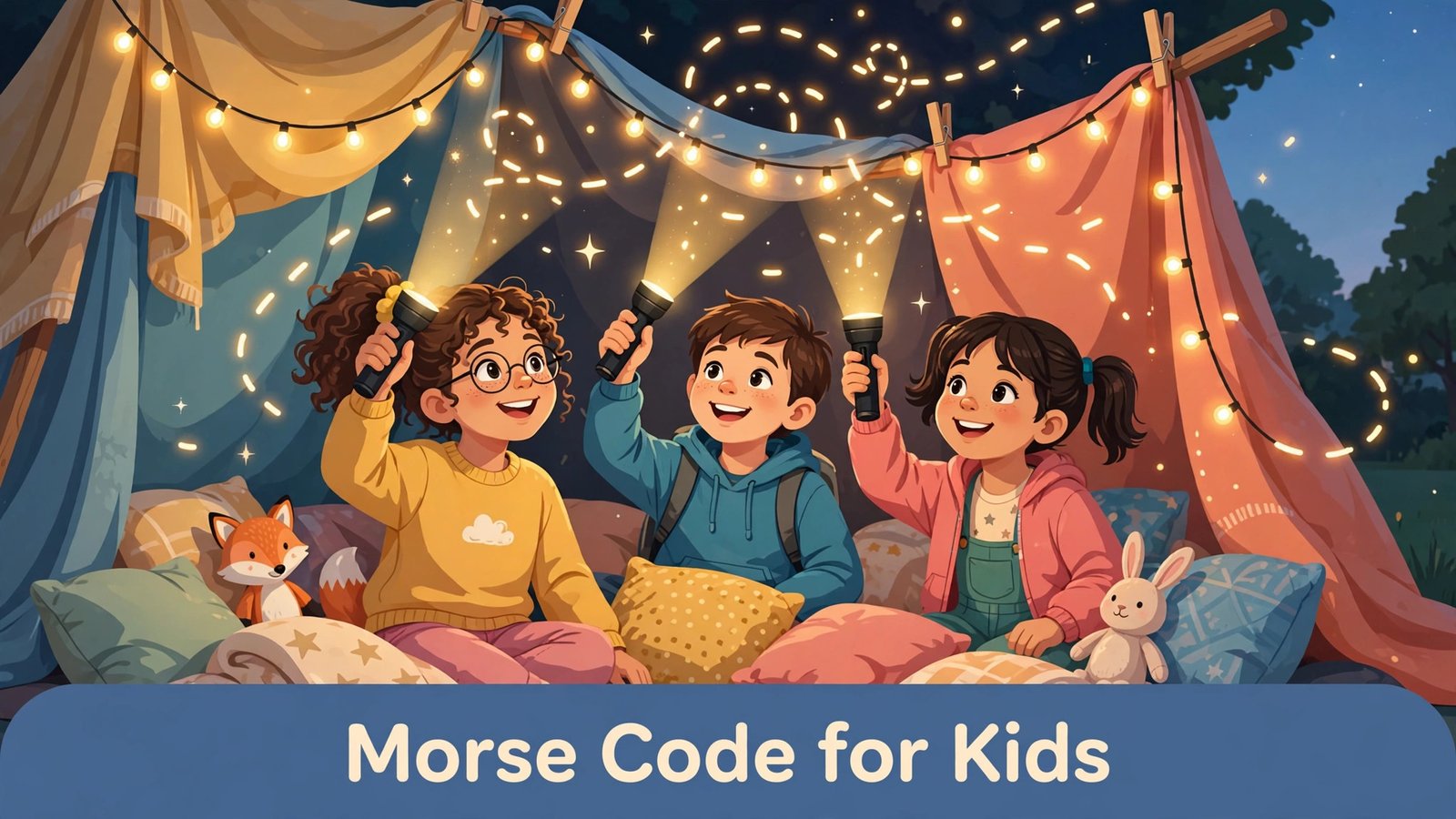
It is wonderfully screen-free. Once kids know a few letters, they can signal with a flashlight under the blankets, tap messages on the dinner table, or blink codes across the classroom. It is an activity that gets them away from screens while still feeling cool and a little bit rebellious.
It connects to real communities. The Boy Scouts and Girl Scouts have included signaling and code skills in their programs for generations. Amateur radio operators — “hams” — still use Morse code on the air every single day, and many got their start as curious kids. Every April 27, enthusiasts celebrate Morse Code Day in honor of Samuel Morse’s birthday, a perfect excuse to start learning.
The Basics Made Simple
Here is the good news: the fundamentals of International Morse Code can be explained in about two minutes.
Every letter and number is represented by a unique pattern of two signals:
- Dot (·) — a short signal. Say “dit.”
- Dash (–) — a long signal, about three times as long as a dot. Say “dah.”
That is the entire alphabet of sounds. Everything else is just combinations.
Start with the two easiest letters in the whole code:
- E is a single dot: ·
- T is a single dash: –
E and T are the most common letters in English, which is why they got the shortest codes — clever, right? From there, patterns grow: A is dot-dash (· –), N is dash-dot (– ·), and SOS — the famous distress signal — is three dots, three dashes, three dots (…—…), sent as one continuous pattern.
Letters are separated by a short pause, and words by a longer one. That is genuinely all there is to the mechanics. Kids do not need to memorize the whole chart on day one. In fact, they should not try. Start with a handful of letters — ideally the letters in their own name — and let curiosity do the rest.
7 Fun Activities to Learn Morse Code
1. Flashlight Signaling
Turn off the lights and let kids “transmit” their names across a dark room with a flashlight. Short click for a dot, long press for a dash. Siblings can take turns sending and decoding. It feels like a spy mission, and it teaches timing naturally. (Remind young signalers never to flash lights at cars, planes, or neighbors’ windows.)
2. Morse Code Bracelet Beads
Grab some string, round beads for dots, and long tube beads for dashes. Kids spell out their initials or a secret word in beads and wear it. It is jewelry with a hidden message — and a great rainy-day craft that sneaks in pattern practice.
3. Tapping and Knocking Games
Dots become quick taps on the table; dashes become longer knocks or slides. One child taps out a word while the others decode it using a printed chart. Start with three-letter words like CAT or DOG, then level up. This one works beautifully in classrooms because it needs zero supplies.
4. Scavenger Hunt with Coded Clues
Write treasure-hunt clues in Morse code and hide them around the house or yard. Each decoded clue leads to the next hiding spot. Kids will happily decode ten clues in a row when chocolate is at the end — and they will not even notice they are drilling letter patterns.
5. LEGO Brick Messages
Use small flat bricks for dots and longer bricks for dashes. Kids build their names or short messages in brick-code on a baseplate, then challenge family members to decode them. It combines building, reading, and secret-keeping in one activity.
6. Drawing Messages
Dots and dashes are easy to draw, which makes Morse code perfect for paper notes. Kids can write coded messages in birthday cards, lunchbox notes, or diary entries. Encourage them to include a tiny key at the bottom for beginners — cryptographers in training still need training wheels.
7. The Family Challenge
Pick a “word of the day” and see who in the family can signal it fastest — by tapping, flashing, or whistling. Keep a running scoreboard on the fridge for a week. A little friendly competition turns practice into a habit, and parents usually get hooked too.
Tips for Parents & Teachers
A few hard-won lessons from people who have taught Morse code to young learners:
Start with their name. Nothing motivates a child like decoding something personal. The letters of their own name become the first “vocabulary,” and everything expands from there.
Keep sessions short. Ten to fifteen minutes of playful practice beats an hour of drilling. Morse code should feel like a game, not homework. Two or three short sessions a week is plenty.
Use sound, not just sight. It is tempting to learn Morse code visually from a chart, but real Morse is heard, not seen. Say the dits and dahs out loud. Clap them. Hum them. Kids who learn by ear pick up the rhythm far faster — and rhythm is what makes signals readable.
Print a chart and keep it handy. Tape a Morse code alphabet chart to the fridge, the classroom wall, or the inside of a notebook. Kids will glance at it constantly at first, then less and less as patterns stick. Many free printable charts are available online — pick one with big, clear letters.
Celebrate the small wins. The first time a child decodes a whole word without the chart, make it a moment. These little victories are what turn a fun afternoon into a lasting interest.
Try It Together Online
Once your child knows a few letters, it is incredibly motivating to see — and hear — their name converted instantly. The free translator at morsezone.com lets kids type any word and watch it become dots and dashes, with audio playback so they can hear exactly what proper timing sounds like. Type in a name, press play, then try tapping along. It is a wonderful way to check your own signaling against the real thing, and kids love the instant feedback.
Frequently Asked Questions
What age can kids start learning Morse code?
Most children are ready around ages 6 to 8, when they can recognize letters and follow simple patterns. Younger kids (4 to 5) can still enjoy the activities — like bead bracelets and flashlight play — without worrying about full decoding. There is no upper limit; it is fun for the whole family.
How long does it take a child to learn Morse code?
Learning a handful of letters takes a single afternoon. Getting comfortable with the full alphabet usually takes a few weeks of casual practice. Fluency — copying by ear at speed — takes months, but kids do not need fluency to have a wonderful time with it.
Do kids still learn Morse code in Scouts?
Yes! Signaling skills, including Morse code, remain part of Scouting traditions in the Boy Scouts and Girl Scouts. Many troops use it for games, ceremonies, and outdoor signaling activities. It is one of those timeless skills that keeps getting passed down.
Is Morse code hard for kids to learn?
Not the basics. The dot-dash system is simple enough for a first-grader to grasp, and the activities above keep it playful. The challenge — and the fun — comes from building speed and recognizing patterns by ear, which develops naturally with practice.
Are there good screen-free ways to practice?
Absolutely — most of the best practice needs no screen at all. Flashlights, tapping games, bead crafts, and coded scavenger hunts are all fully offline. A printed alphabet chart is the only “equipment” required, and even that becomes unnecessary as kids memorize their favorite letters.
Conclusion
Morse code might be one of the oldest messaging systems in the world, but for kids it feels brand new — a secret language that is theirs to master. It sneaks in STEM thinking, connects them to real history from Samuel Morse to the Titanic, and gives the whole family a screen-free game that never gets old.
So grab a flashlight, print a chart, and start with one name. By Morse Code Day on April 27, your young cryptographer might just be tapping out full sentences — and you will be tapping right back.