SOS SOS IN MORSE CODE: THE COMPLETE GUIDE, SIGNAL AND EMERGENCY CODE
Out of despair, in times of distress, when it seems to be no words left to call for help, three simple letters – SOS– become the strongest signal across the globe. But do you know how to send SOS in Morse code, or what it looks and sounds like? Whether you are a survival enthusiast, just someone looking to learn something new or simply want to be prepared — This comprehensive guide covers everything about the SOS Morse code pattern meaning, history and usage in different formats.
Let’s break it all down.
What Is SOS in Morse Code?
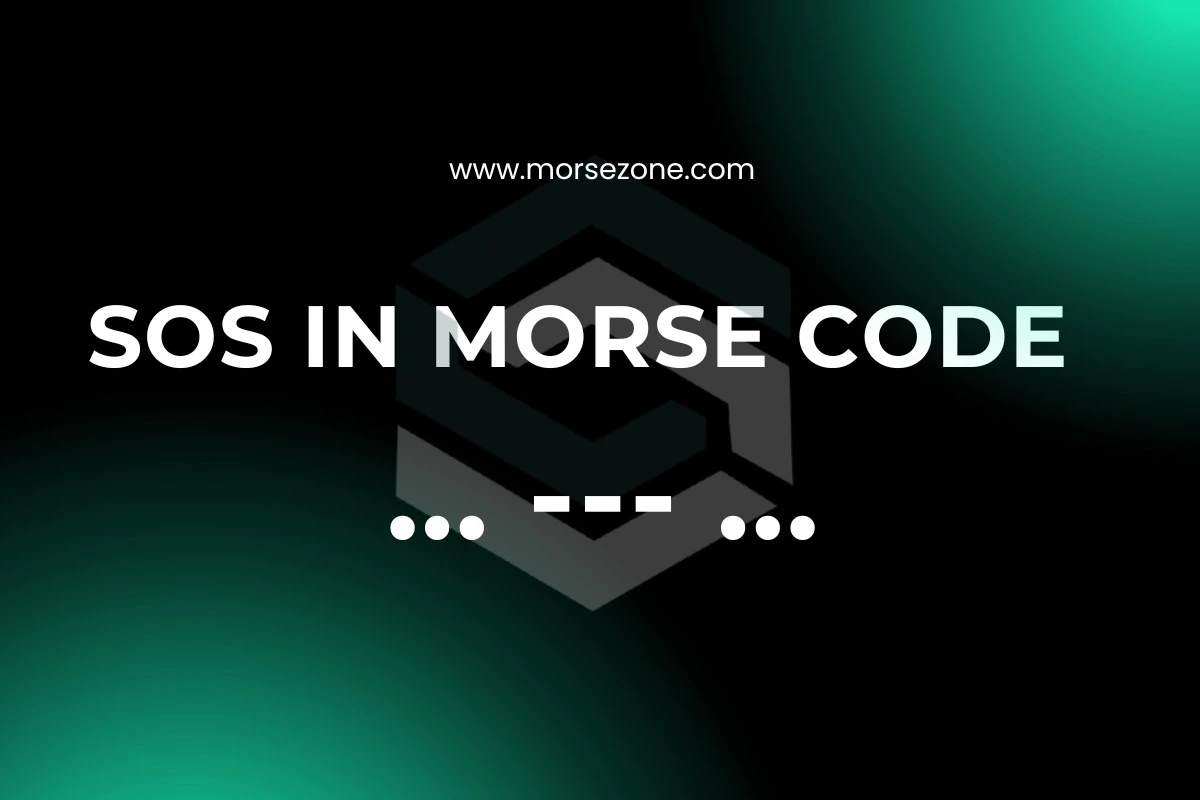
SOS in Morse code is represented as:
… — …
Dot dot dot, dash dash dash, dot dot dot — all written together without letter spacing. It is the international distress signal known throughout the world, sent out from ships, aircraft and survivors in distress.
Here is the full breakdown:
| Letter | Morse Code Pattern |
| S | … (three short) |
| O | — (three long) |
| S | … (three short) |
Full SOS pattern: … — …
Actually, that grand morse code style is intentionally basic — convenient to memorize, simple to transmit in addition to difficult to mistake for any other sign.
What is SOS in Morse Code
This is one of the queried questions — and you might be surprised by the answer.
SOS is not really an abbreviation for anything No, this is not an initialism for “Save Our Ship,” “Save Our Souls” or “Send Out Succour,” although such phrases have become popular backronyms in the last couple of decades.
So what does SOS actually mean in Morse code? The letters S-O-S were selected just because they are extremely simple Morse code. Dot dot dot dash, three dashes and a final period — easy to send, clear to hear, impossible to misread even though noise.
Insurance SOS was ultimately ratified by the International Radio Telegraphic Convention as an SOS distress signal in 1908 and that has been the global signal SOS ever since.
How Does SOS Sound in Morse Code?
If you’re ever in or near an emergency knowing what does SOS sound like in morse code is crucial.
The SOS sound in Morse code follows this audio pattern:
- Short beep = dot (.)
- Long beep = dash (-)
So the SOS morse code audio sounds like:
Beep-Beep-Beep — Beeeeep-Beeeeep-Beeeeep — Beep-Beep-Beep
Short-Short-Short | Long-Long-Long | Short-Short-Short
In morse code sound, the sos is played for an unstopping sequence ANNOYING — no breathing room, slack in between the sequences of S and O. How does SOS sound in morse code that is — a rhythm so distinct trained ears recognize it instantly.
There are many online tools to hear SOS in morse code audio, and though I really recommend listening it at least once so your brain gets used to it.
Morse Code SOS — The More You Know
1. How to Tap SOS in Morse Code
The most fundamental survival skill you can acquire is how to use SOS with Morse code. You really just need any surface — a wall, a pipe, a rock — and your hand or some solid object.
Tapping pattern:
- 3 quick taps → (S)
- 3 slow, heavy taps → (O)
- 3 quick taps → (S)
Repeat this at least 3 times but separate each full SOS sequence with a pause before repeating. This is precisely how to do SOS in Morse code and knock on SOS in Morse — when trapped or buried like a mine cave-in or earthquake debris.
2. Use Light to Signal SOS in Morse Code
One of the more widely-known signaling methods, SOS in Morse code is one of the most obvious rescue signals due to its light-signaling variations that are easily visible at night or over open terrain.
How to blink SOS in Morse code:
- 3 short flashes → S
- 3 long flashes → O
- 3 short flashes → S
You can use a flashlight, mirror reflecting sunlight, phone torch or even car headlights. If you are trying to signal an aircraft or distant ship, Blink SOS in Morse with a flashlight significantly improves the odds of timely recovery.
How to say SOS in Morse code blinking — the exact timing:
- Short flash = 1 second ON
- Long flash = 3 seconds ON
- Gap between letters = 3 seconds OFF
- Gap between SOS cycles = 7 seconds OFF
This is the worldwide standard in morse code blinking sos used by all rescue services around the world.
3. Sending SOS in Morse code by radio
The international distress frequency for SOS Morse code is 500 kHz, which radio operators broadcast on. The signal is a series of continuous streams:… —… in regular intervals.
How to send SOS in Morse code using a radio:
- Switch to the distress frequency (500 kHz for maritime, 121.5 MHz for aviation)
- Tap or transmit … — … using the transmit button
- Repeat every few minutes
- Add a voice message if possible: “MAYDAY MAYDAY MAYDAY”
4. How to write S O S in morse text format
How to write SOS in Morse code in text format:
… — …
You can also write it using the International phonetic dots-and-dashes style:
dot dot dot — dash dash dash — dot dot dot
How to spell SOS in Morse code letter by letter:
- S = dot dot dot
- O = dash dash dash
- S = dot dot dot
5. How to Type SOS in Morse Code
How to type SOS in Morse code on any keyboard:
… — …
That is, if you are looking at a keyboard Use a dot (period) for the dots and use hyphen for the dashes. The digital format that this is in, is the standard used on Morse code translators and messaging.
The full SOS pattern for visual morse code:
Here is the complete visual morse code pattern for SOS:
S = • • •
O = — — —
S = • • •
Together as one unbroken distress signal:
– ••———•••
This is actually a very specific style of code pattern and has been so arranged that the actual code looks symmetrical and well identifiable not just to us — but even an untrained observer. This is exactly the reason that this simple meaning pattern was selected as a worldwide standard distress signal.
Full Context:: History and Meaning of SOS —
When Was SOS Adopted?
The SOS distress signal was first introduced in Germany in 1905, and later internationally adopted at the Second International Radiotelegraphic Convention (Berlin, 1906), becoming effective worldwide on July 1, 1908.
SOS, but that there were different distress codes used in different countries — meaning tremendous confusion and risk during maritime disasters. The world needed a single signal, and… —… was that signal.
Why This Particular Pattern of Morse Code?
The morse code meaning behind SOS’s selection was purely practical:
- It’s symmetrical (same start and end)
- It’s easy to remember and transmit under stress
- The code meaning is universally understood
- It sounds and looks completely distinct from any other signal
- Even a weak or partial transmission of … — … is still recognizable
The Titanic and SOS
Perhaps the most historical application of SOS morse is its use at the RMS Titanic disaster in 1912. When the Titanic radio operators sent their distress calls, both the archaic CQD call and the newer SOS signal were transmitted — one of the earliest high-profile uses of SOS in maritime scenarios. This became the universal global emergency standard for sos morse code.
How to Learn SOS in Morse Code (And More)
If you want to learn Morse code beyond just SOS, start with these steps:
Step 1: Memorize the SOS pattern first — … — …. It’s your most important survival tool.
Step 2: Learn the 26 letters of the alphabet in Morse code using a chart or flashcard app.
Step 3: Practice sending signals by tapping on a surface daily for 5 minutes.
Step 4: Use a Morse code translator app to convert full sentences and check your accuracy.
Step 5: Train your ears using morse code sound audio files — listen and identify patterns without looking at the screen.
Step 6: Practice the signal methods — tapping, blinking, and audio — so you’re prepared in real-life scenarios.
Learn Morse code gradually but make SOS your first and most practiced skill. In a genuine emergency, muscle memory could save your life.
SOS vs. MAYDAY — What’s the Difference?
Many people confuse these two distress signals. Here’s how they differ:
| Signal | Type | Used By | Method |
| SOS (… — …) | Morse code / visual / tap | Maritime, survival | Radio, light, tapping |
| MAYDAY | Voice call | Aviation, maritime | Radio voice |
Both carry the same meaning — “I am in life-threatening danger, send help immediately.” SOS is used when voice communication is impossible or unreliable. MAYDAY is used when voice radio communication is available.
Real-World Uses of SOS Morse Code
The code SOS has saved countless lives across various situations:
Maritime disasters — Ships transmit … — … on emergency radio frequencies when sinking or in severe distress.
Earthquake and mine rescues — Trapped survivors tap SOS in Morse code on pipes and walls, which rescuers detect using seismic listening equipment.
Aviation emergencies — Pilots use the SOS signal when radio systems fail.
Wilderness survival — Hikers and trekkers use flashlights or mirrors to send SOS in Morse code light signals to search aircraft.Military operations — Special forces use SOS morse as a covert emergency signal when radio silence is required.